
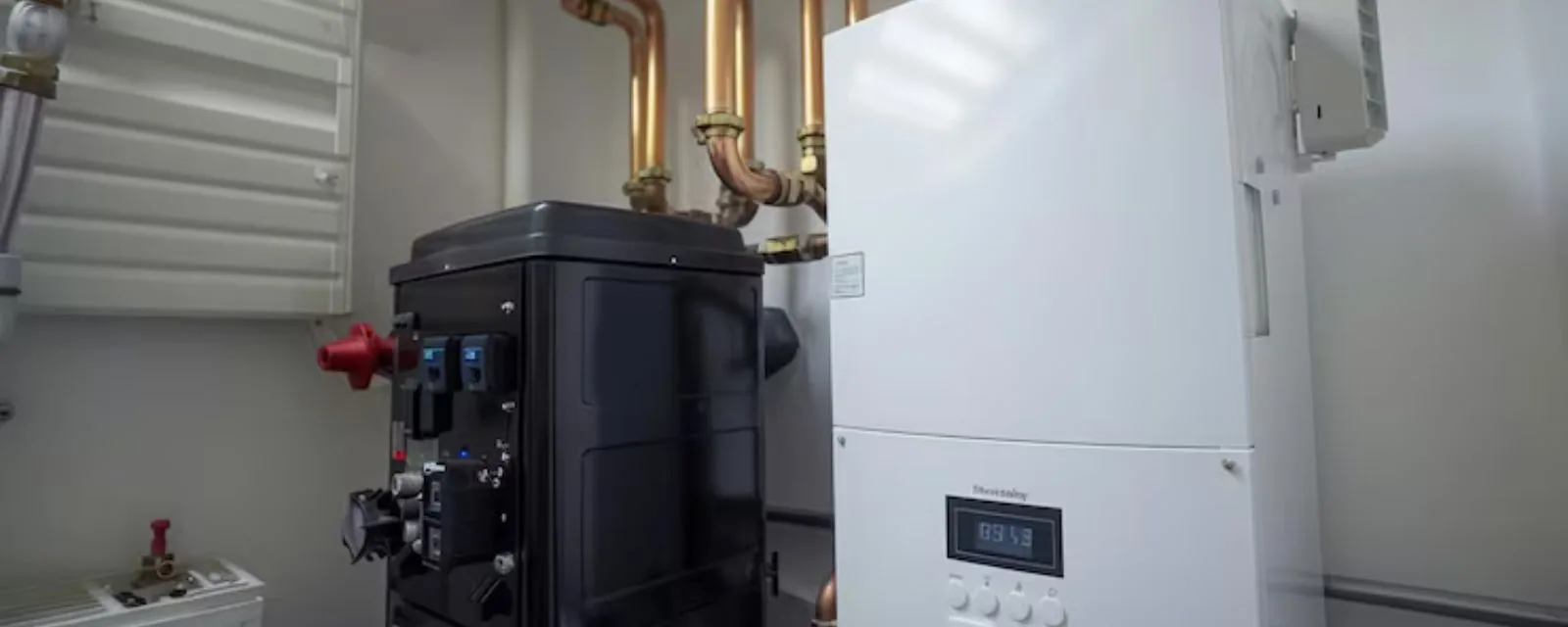
A tankless water heater heats water as it flows instead of storing it, which is why the work is part plumbing, part gas fitting and part electronics. Holly Springs homeowners call us to install one, to keep one running well and to fix one that has started throwing error codes or running lukewarm. Dispatch is open 24/7, and a licensed plumber tells you the price before work starts.
Because tankless units depend on gas pressure, venting and water flow, a problem often has nothing to do with the heater itself. We check the whole path.
Install, service or repair: which one do you need
People use the word service loosely. This table separates the three kinds of tankless calls so you can tell dispatch the right one.
| Type of call | What it covers | Typical trigger |
|---|---|---|
| Installation | Mounting, gas or electric supply, venting, condensate, water connections | Replacing a tank or building new. See water heater installation |
| Service | Flushing, descaling, filter cleaning, vent and condensate checks | Routine upkeep, falling flow or temperature, manufacturer's maintenance reminders |
| Repair | Error code diagnosis, sensors, igniters, fans, flow sensors, control boards | Heater lockout, cold water bursts, no heat or a shutdown mid-shower |
| Conversion | Removing an old tank and adapting pipes, gas and vent for a tankless unit | Upgrading when the old tank is near the end. See water heater replacement |
Flushing and descaling your tankless heater
A tankless unit has a heat exchanger with narrow passages, and mineral scale narrows them over time. A flush circulates a descaling solution, often white vinegar or a manufacturer-approved product, through the exchanger using a small pump and two hoses. The unit is isolated from the house while it runs, then rinsed clean.
How often to flush is a question for your manufacturer's manual, not a number we can promise. It depends on the water you have and the model you own. Follow the maintenance schedule in the manual, and if you no longer have it, the model number on the unit lets you find a copy online.
The Cherokee County Water and Sewerage Authority (CCWSA) reports that Cherokee County water is very soft, at 16 mg/L as calcium carbonate. Soft water builds scale slowly, so a flush may be a lower priority here than in hard-water areas. We cannot tell you your own water's scale level from that, so test your tap, check your utility's water report if your water is not from CCWSA and let the unit's performance guide you.
Signs a unit needs a flush are falling flow, longer waits for hot water, a rumbling or kettle-like sound and error codes that point to the heat exchanger or flow sensor. Many of these also have other causes, which is why we test before we flush.
Tell dispatch the brand, the error code on the display and what changed. We will explain the visit and the price before any work begins.
Symptoms and error codes, in plain terms
Every brand uses its own code list, and the display number alone rarely tells the whole story. These are the general categories we see.
Ignition or flame errors
The unit tries to light and shuts down. Causes include low gas supply, a dirty flame rod, a blocked vent or a failing igniter.
Flow or low-flow errors
The heater needs a minimum water flow to fire. A clogged inlet screen, a closed valve or a partly blocked fixture can keep it from lighting.
Overheat or limit errors
A safety switch has tripped. Scale inside the heat exchanger, a failing sensor or bad flow control are the usual causes.
Exhaust and vent errors
The unit senses restricted exhaust or a failed fan and locks out. Never bypass this. It is protecting you from carbon monoxide.
Cold water sandwich or fluctuating heat
Hot water that surges cold, then hot again often points to a flow, sensor or pressure issue, or to a very low draw that is below the unit's minimum.
How we diagnose a tankless fault
We work from outside the heater in, because a lot of faults begin before the water or gas reaches it.
- 1
Read the code and the history
We note the display code, check it against the manufacturer's list and ask when the symptom began and what changed in the house.
- 2
Check supply and flow
We confirm the gas pressure while the unit fires, the water flow rate and the cleanliness of the inlet filter screen.
- 3
Inspect the vent and condensate
A flashlight and mirror show vent joints and blockages. We also confirm that the condensate drain flows and the neutralizer is not spent.
- 4
Test parts and quote the fix
A multimeter and a manometer check sensors, igniters and the gas valve before we recommend a part. You hear the price first.
Gas line sizing and venting
Tankless gas units burn a lot of fuel at once, often much more than a tank unit. A gas line sized for a standard tank can be too small, and the symptoms are weak flame, shutdowns when two fixtures run and error codes under load. The fix may be a larger gas pipe run, not a bigger heater.
Venting is as important. Condensing models use plastic vent pipe that is routed out a wall or roof, with sloped sections so condensate drains back. Non-condensing models use stainless vent pipe and tolerate higher exhaust temperatures. Each manufacturer sets the allowed pipe type, length and number of elbows, and we follow those instructions.
Gas line inspection and new gas line work involve safety rules we take seriously. If you smell gas at any point, leave the building and call your gas utility or 911 first.
Condensate drains and neutralizers
A condensing tankless heater squeezes extra heat out of the exhaust, and the water that forms is mildly acidic. It must drain through a line to a proper drain, often through a small neutralizer cartridge that raises the pH before the water goes down the line.
A clogged or frozen condensate line can shut the unit down with an error code, and a spent neutralizer can let acidic water attack drain pipe. We check both when we service a condensing unit, and we ask your manufacturer's manual how often to replace the cartridge.
Recirculation and waiting for hot water
Tankless does not mean instant. Hot water still has to travel the pipe from the heater to the faucet, and the cold water already in that pipe comes out first. A recirculation pump or a built-in recirculation mode keeps hot water moving through a return line or crossover valve so the wait shrinks.
Recirculation adds a pump, a timer or sensor and sometimes a return line. It also uses power and can add wear on the pump, so it is a trade-off. If the long wait is your main complaint, tell dispatch and we will look at the pipe layout and the options before recommending hardware.
When a tankless heater is not the right choice
Tankless can be a good match, but it is not right for every house. We would rather tell you than sell you a unit that disappoints.
- The gas line is too small and the run to upsize it is long or hard to reach
- The vent path is awkward, with no good way to reach an outside wall or roof
- Your home needs very small hot water draws, which can fall below the unit's minimum flow
- The upfront cost matters more to you than long-term running cost
- A tank in the same spot would work well and the household is small
If one of those fits, a standard or heat pump tank may serve you better. Our installation page compares options.
Gas smell or carbon monoxide alarm
If you smell gas or a carbon monoxide alarm sounds, leave the building at once and call your gas utility or 911 from outside. Do not try to reset the heater. A licensed plumber can inspect it after the utility clears the home, and dispatch does not promise a response time in these cases.
What affects the price of tankless work
We give a clear price before work starts. Insurance generally does not pay for maintenance or an upgrade, though a policy may cover sudden water damage. Check with your agent.
Type of work
A flush is a smaller job than a repair with a part, and a full install is larger.
Brand and model
Parts availability and warranty terms differ, and some models need manufacturer-specific parts.
Gas and vent work
A larger gas line or a new vent run adds material and time.
Condition of the heat exchanger
Heavy scale can need repeated flushing or replacement of parts.
Access and location
A wall-mounted unit in a garage is easier to reach than one in a closet or attic.
Want your real number? Tell dispatch the brand, the model and what the unit is doing. We will walk you through the visit before anyone is sent.
Tankless heaters in Holly Springs homes
Permit rules vary, so ask the City of Holly Springs at 770-345-5536 if your address is in city limits. In unincorporated areas, the Cherokee County Development Service Center at 770-721-7810 issues plumbing permits to state licensed technicians. Georgia's minimum plumbing code is based on the International Plumbing Code (IPC) with Georgia amendments.
We serve Canton and Ball Ground as well. If a heater problem looks more like a hidden leak than a tankless fault, our leak detection page explains how we look.
Tankless water heater questions
How do I flush a tankless water heater?
A flush uses a small pump and hoses to circulate a descaling solution through the heat exchanger, then rinse it out. Your manual gives the steps and approved solutions for your model. We can do it for you, and we check the filter screen and vent at the same time.
How often does a tankless heater need descaling?
That is a question for your manufacturer's manual and for a test of your own water. CCWSA reports very soft water for Cherokee County, so scale tends to build slowly. If your water comes from another source, test it.
What does my tankless error code mean?
Each brand has its own list in the manual. Codes fall into groups such as ignition, flow, overheat and exhaust, and a code is a clue rather than a diagnosis. Tell dispatch the brand and the code.
Can you put in a tankless heater where my tank is now?
Often yes, but the gas line size, the vent path and the electrical supply decide it. We visit, check them and give you the price before work starts.
Why does my tankless heater give cold water in the middle of a shower?
Common causes include low flow, a clogged inlet screen, a failing sensor or a draw that is too small for the unit to fire. A technician tests flow and gas supply to find which one.
Is a tankless heater worth it for my home?
It depends on your gas line, your vent path and how you use hot water. It is a good fit for some homes and a poor one for others, and we tell you which before you buy.