
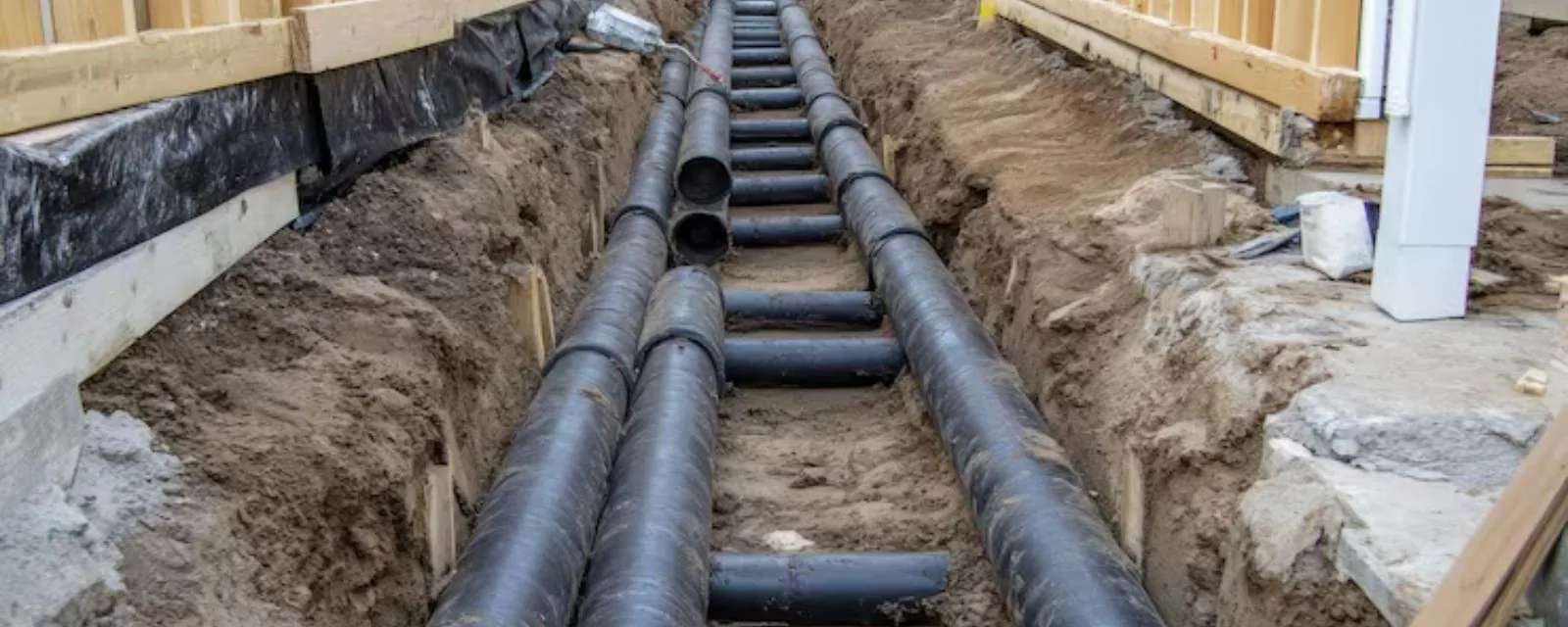
A sewer line that has cracked, shifted or collapsed cannot be fixed by clearing it, because the damage sits in the pipe itself. A licensed plumber in Holly Springs can find the break with a camera, show you what the pipe looks like, and lay out the repair options with the trade-offs. Dispatch is open 24/7, and you hear the price before work starts.
If wastewater is already coming into the house, stop using water and read the section on what to do first. The steps below protect your floors and your family while a plumber is on the way.
Signs the sewer line itself is failing
A clogged drain and a broken sewer line can look alike at first. These signs separate them, because they point to damage that cabling alone will not cure.
Backups that return soon after cleaning
A line cleared on Monday and stopped again by the next weekend often has roots, a belly or a broken joint that catches waste faster than a cable can keep up.
Sewage smell in the yard or crawlspace
A steady sewer odor outside, especially over one patch of grass, can mean wastewater is leaking from a cracked pipe underground.
A soft, green or sunken patch of lawn
Leaking wastewater feeds grass and loosens soil. A wet low spot with no rain and no irrigation nearby deserves a camera look.
Gurgling toilets and slow drains in the lowest fixtures
When the lowest toilet or the floor drain acts up first, the trouble is usually in the main line below the house.
Drain flies, rodents or cracks in a slab
Pests follow broken pipe, and a damaged line under a slab can erode soil and add to settling.
Sewage coming into the house: what to do first
A sewage backup is a health problem as well as a plumbing one. Work through these in order.
- 1
Stop all water use
No flushing, laundry, dishwasher or showers. Every gallon you send down has nowhere to go and will come up at the lowest drain.
- 2
Keep people out of the wet area
Children, pets and anyone with a weak immune system should stay away. Wear boots and rubber gloves if you have to cross the room, and wash well after.
- 3
Call dispatch
Say which fixtures are backing up, whether the water is dark and where the cleanout is. A licensed plumber will tell you what to expect for the visit.
- 4
Protect what you can
Lift rugs and boxes off the floor and open the cleanout cap only if the plumber asks. Photograph the damage before cleanup for your insurer.
Call dispatch, stop using water, and tell us where it is coming up. We will explain the plan and the price before work begins.
How a sewer break is found
The tool is a sewer camera, a waterproof lens on a long flexible rod that goes in through the cleanout. It records the inside of the pipe on a monitor, so you can see a crack, a joint pulled apart, roots or standing water. See our sewer camera inspection page for how the process works and what a camera cannot show.
A locator, a handheld receiver that picks up a signal from the camera head, marks where the problem sits above ground and how deep. That depth drives the choice between digging and lining. The line is usually cleaned first so the lens can see the wall.
Spot repair, lining and replacement side by side
No option wins everywhere. The right one depends on what the camera shows and what sits on top of the pipe.
| Option | What it is | Works best when | Main drawback |
|---|---|---|---|
| Spot repair | Dig down to one bad section and replace it | One short, shallow break in an otherwise sound pipe | Other weak joints elsewhere may fail later |
| Pipe lining (trenchless) | A resin-soaked liner is pulled in and cured to form a new pipe inside the old one | Cracks, small holes and root-prone joints in a pipe that still holds its round shape | Cannot fix a collapsed, offset or badly bellied section |
| Pipe bursting (trenchless) | A tool breaks the old pipe while pulling a new one into its path | Pipe is too damaged to line but a trench would wreck landscaping | Needs entry pits, and nearby utilities limit it |
| Full replacement | Open trench, remove old pipe, lay new pipe at the right slope | Collapsed, offset or sagging pipe, or a run with many failures | Most digging, longest disruption, usually needs a permit |
Which repair to choose, and the trade-offs
Spot repair is the least invasive when the damage is short and the pipe is not deep. It leaves the rest of the line as it was, so we tell you if the camera shows other weak spots that a spot repair would not cover.
Lining avoids a trench, which matters under a driveway, a tree or a patio. The pipe still needs to be clear enough for the liner to cure properly, and the liner slightly narrows the inside diameter. If the camera shows a belly or a collapse, lining will not correct it, and we will say so.
Replacement is the most work, but it is the only fix that resets slope and removes every bad joint. When the pipe is in poor shape end to end, it can cost less over time than repeated repairs.
Cast iron sewer pipe
Cast iron was common in older homes, and it fails from the inside. Rust builds a rough, scaly layer that catches paper and grease, and the wall can thin until the pipe cracks, often along the bottom. A camera shows flaking, narrowing and bright orange rust.
Lining can save a cast iron line that is rough but intact. Where the pipe has cracked through or crumbled, replacement is the better choice. We do not guess the pipe material, because the camera and the age of the house together tell us what we are looking at.
Roots and bellies in the line
Roots enter at joints and cracks, drawn to the moisture, and then thicken into a mat. Cutting them with a machine clears the line, but they will be back unless the opening is sealed. Hydro jetting cleans a rooted line well when the pipe is sound, and a liner can seal the joints afterward.
A belly is a low spot where the pipe has sagged and water collects. Waste settles in the dip and builds up, so the line clogs again and again. A camera with a locator shows the sag, and the usual cure is replacing that section so the pipe drains downhill.
Septic or public sewer: check before you call
Not every Holly Springs address connects to a public sewer. If your bill comes from CCWSA or another utility for sewer service, you are likely connected. A tank lid in the yard, or no sewer charge on your bill, suggests a septic system.
A septic tank, its distribution box and the drain field are not repaired like a sewer line. Call the North Georgia Health District at 770-479-0444 with septic questions about the tank or the field. We can look at the house-side pipe up to the tank, so tell dispatch which system you have.
Sewage and sewer gas are health risks
Raw sewage carries bacteria and viruses. Avoid skin contact, do not use a household vacuum on wet sewage and do not mix bleach with other cleaners. If anyone feels dizzy or ill in a room with a strong sewer smell, leave the room and open a window.
What drives the cost of a sewer line repair
You get a clear price before work starts. Standard homeowner policies often exclude sewer line wear and tree-root damage, though some add an endorsement for water backup or service lines, so ask your agent before the work.
Repair method
Spot repair, lining, bursting and replacement carry very different labor and material loads.
Depth and length of the damage
A short, shallow break is simpler to reach than a long, deep run.
What sits on top of the pipe
Concrete, a driveway, mature trees or utility lines raise the work needed to reach or avoid the pipe.
Pipe material and condition
Cast iron, clay and plastic each affect which repair is possible and how much pipe needs to come out.
Permit and inspection steps
Some jobs need a permit and an inspection, which adds time.
Time of the call
After-hours visits can price differently, and dispatch quotes the number before anyone is sent.
Want your real number? Tell dispatch what you see and which fixtures are affected, and we will explain what the visit covers before the technician arrives.
When cleaning is enough and when it is not
Many backups are blockages in a healthy pipe, and those are handled by clearing the line. Our sewer line cleaning page explains main line clearing, cleanouts and routine maintenance. If the camera finds a crack, a collapse or a belly, cleaning only buys time.
That is why a good visit often does both: clear the line to get you running again, then camera it to see whether repair belongs on the list.
Sewer repair in Holly Springs and nearby
Permit rules for sewer work vary by address. Inside the city, ask the City of Holly Springs at 770-345-5536 before any digging. In unincorporated areas, the Cherokee County Development Service Center at 770-721-7810 issues plumbing permits to licensed technicians. Georgia's minimum plumbing code is based on the International Plumbing Code (IPC) with Georgia amendments.
We also serve Hickory Flat and Canton. Many homes outside the city sewer area rely on septic, so the first question on any call is which system you have. If the cause may be leaking water instead, see leak detection.
Sewer line repair questions
Do you handle sewer line repair emergencies at night or on weekends in Holly Springs?
Yes. Dispatch is open 24/7. For sewage coming into the house, the first visit usually clears the line to stop the backup. A camera pass then shows whether a repair is needed, and the options and price are explained before work starts.
What should I do first if sewage backs up into my house?
Stop using all water, keep children and pets away from the wet area, and call dispatch. Do not use chemical drain cleaner. Photograph the damage for your insurer before cleanup.
How do I know whether my line needs repair or just cleaning?
A single backup in a healthy pipe may only need clearing. Repeat backups, a sewage smell in the yard or a sunken patch of lawn point to damage. A camera inspection settles the question.
Is trenchless lining better than digging?
It is less disruptive, and it suits cracks and root-prone joints in a pipe that still holds its shape. It does not fix a collapsed, offset or sagging pipe, which needs replacement.
My house might be on septic. Who do I call?
Call the North Georgia Health District at 770-479-0444 for septic tank and drain field questions. If a backup is flooding the house, call dispatch too, because the pipe from the house to the tank is a plumbing job.
Can tree roots break a sewer line?
Roots usually enter through an existing crack or loose joint, and then widen it as they grow. Clearing the roots helps for a time. Sealing or replacing the damaged section keeps them out.
Will my homeowner insurance cover sewer repair?
Often not for wear, age or roots. Some policies cover sudden water backup or offer an add-on. Check your policy or ask your agent before you decide.