
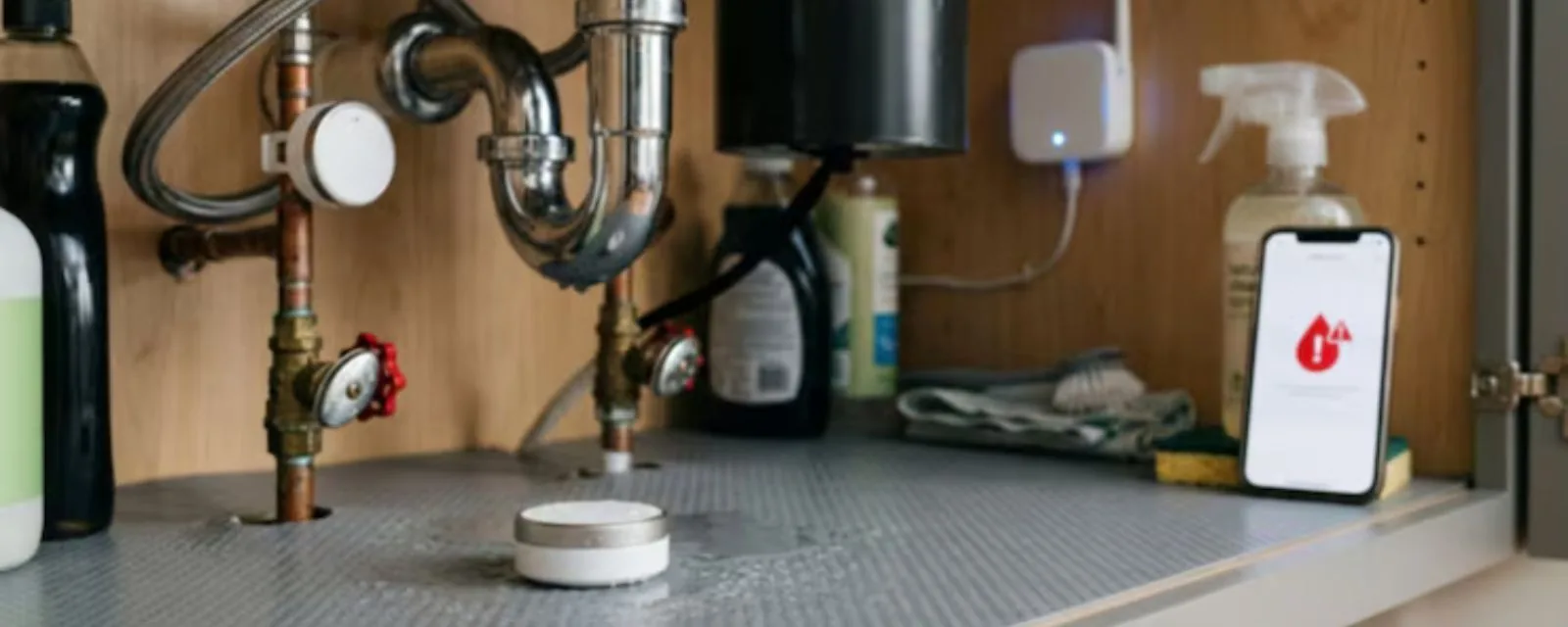
If your water meter keeps moving with everything turned off, or a ceiling stain is growing, call now instead of waiting for the next bill. Emergency leak detection in Holly Springs means a licensed plumber works out where the water is escaping before anyone cuts into a wall or digs up a yard. Dispatch is open 24/7, including nights, weekends and holidays, and you hear the price before work starts.
Most leaks are not dramatic. They start as a quiet hiss, a warm patch of floor or a bill that creeps up month after month. This page walks through the symptoms, a meter test you can run yourself in ten minutes, and what each finding tool can and cannot tell us.
When a hidden leak cannot wait until Monday
Some leaks can sit for a day while you book a normal visit. These cannot, because the water is either damaging something right now or running through the main in volume.
The meter keeps turning with every tap off
A steady, round-the-clock flow means water is leaving the pipes somewhere. It could be a slow drip at a toilet or a full break underground, and only a test tells them apart.
A ceiling stain is spreading or sagging
A stain that grows by the hour, turns brown at the edges or feels soft to a gentle press means water is pooling above it. Drywall holds a surprising amount before it fails all at once.
A hiss or trickle inside a wall
Pressurized water makes a thin, steady sound in the quiet of the night. If you can hear it with the dishwasher and washer idle, a supply line is leaking.
A warm spot on the floor or soggy ground outside
A hot-water line leaking under flooring can warm a patch you can feel in bare feet. Outside, a soft, green or sunken stretch between the meter and the house points to a buried line.
Pressure drops while the bill climbs
Water that leaks out before it reaches your fixtures often shows up as weak flow at the tap. Low pressure alone has other causes, but paired with a rising bill it deserves a closer look.
Check your own water meter in ten minutes
This test is safe, needs no tools and tells dispatch a great deal before anyone arrives. Do it once, write down what you see, and share it on the call.
- 1
Make the house stand still
Turn off every faucet, make sure no toilet is running, and pause the dishwasher, washer and ice maker. If you have an irrigation system, set it to off for the test.
- 2
Open the meter box and find the dial
Lift the lid carefully, since insects and debris collect inside. Look for the small flow indicator on the face of the meter, often a tiny triangle, star or wheel, that turns whenever any water passes.
- 3
Watch it for two full minutes
If the indicator is perfectly still, wait fifteen minutes and look again. Any movement with everything off means water is escaping on your side of the meter.
- 4
Split the house in half
If the meter moves, close the main shutoff valve at the house and look again. If the meter stops, the leak is inside the building. If it keeps moving, the leak is in the buried line between the meter and the house.
Tell dispatch what the flow indicator did and when you last saw it still. We will explain the visit and the price before anyone is sent.
What to do while you wait for the plumber
A few minutes of simple prep keeps the damage small and shortens the visit.
- Close the main shutoff if water is visibly pouring through a ceiling, floor or wall, then open one low faucet to relieve pressure.
- Move furniture, rugs and boxes away from any wet floor or ceiling area.
- If a ceiling is bulging with water, place a bucket under it and poke a small hole at the lowest point only if you can stand clear of the drop. Otherwise leave it for the plumber.
- Keep electronics, lamps and power strips out of the wet zone, and stay out of rooms with water near outlets until the breaker is off.
- Write down the meter reading or take a phone photo of it, then check it again an hour later.
- Note when the problem started and which fixtures run when the sound is loudest.
Leak-finding tools and what each can and cannot do
No single tool finds every leak. A good visit combines two or three of these and confirms the result before anything is opened.
| Tool | How it works | Good for | Limits |
|---|---|---|---|
| Acoustic listening | Sensitive microphones and ground sensors pick up the sound of water escaping a pressurized pipe | Slab leaks, buried lines, hissing walls | Plastic pipe and background noise from traffic or a pump can mute the sound |
| Thermal imaging | An infrared camera shows temperature differences behind drywall and under flooring | Hot-water leaks, ceiling wet spots | Shows where moisture or heat is, not always the exact break, and cold-water leaks are harder to see |
| Moisture meter | A probe or pad reads the water content of drywall, wood and subfloor | Mapping how far water has spread | Cannot tell a leak from a past event that has dried |
| Pressure testing | The line is isolated and pressurized, then watched for a drop on a gauge | Proving a line leaks and which section | Says a leak exists but not where it is |
| Tracer gas | A harmless gas mix is pushed into the line and sniffed for at the surface | Hard-to-hear leaks in sealed or plastic lines | Slower, and heavy soil or deep concrete can slow the gas |
| Camera inspection | A small camera runs through a drain line | Drain and sewer leaks, cracks, roots | Does not work in pressurized supply pipes |
A stain on the ceiling or a hiss inside the wall
The wet spot you see is rarely right under the leak. Water travels along joists, runs down pipes and pools where drywall sags, so a stain in the dining room can come from a bathroom upstairs or a roof penetration that never touched a plumbing line. We start with the moisture meter and thermal camera to map the wet area, then trace it back along the supply and drain lines overhead.
A roof or window leak can look identical to a plumbing leak. If the stain grows only after rain, the source is probably not a pipe, and a roofer is the right call. If it grows on a dry week, or tracks with a shower or the washer, it is plumbing.
A hiss in a wall is usually a pinhole in copper or a failed fitting at a joint. Listening along the wall narrows it to a stud bay, and we cut the smallest opening that reaches the pipe. Your repiping options come into play only if the pipe is worn throughout rather than failed in one spot.
Leaks under the house and in a crawlspace
A crawlspace leak announces itself with a musty smell, bowed insulation, mold on joists or a floor that feels spongy over one area. Water and wood together invite rot and pests, so this is a leak to chase early rather than late.
We check supply lines, drain connections and water heater hookups from below, using a light, a moisture meter and the sound of the pipes when the house is quiet. If your home sits on a concrete slab instead, the same symptoms point to something different, and our slab leak repair page explains how that is found and fixed.
Buried line leaks between the meter and the house
If the meter test pointed outside, the leak is in the buried service line. Signs include a wet or unusually green strip of lawn, a sunken patch, a spot that stays soft in dry weather or a drop in pressure that gets worse with time. Listening gear and a pressure test narrow the break to a few feet before any digging.
Ownership matters here. If your water bill comes from the Cherokee County Water and Sewerage Authority (CCWSA), the authority owns the line from its main to the meter, and the customer owns the line from the meter to the building.
CCWSA publishes an address-searchable service line inventory, and its customer service line is 770-479-1813 during business hours. A leak on the meter side of the box is the utility's to fix, so we help you tell which side you are on before any repair work is priced.
Once the break is located, water line repair covers digging versus trenchless options. If the leak is in a pressurized line inside a wall and the pipe has failed more than once, burst pipe repair covers the next steps.
Sprinklers, pools and leaking meter boxes
Irrigation leaks hide in valve boxes, buried risers and zone lines. A wet patch that appears only when a zone runs, or a meter that moves only when the system is on, points to the sprinklers rather than the house. We isolate the system from the house supply to tell the two apart, and we repair or cap the leaking section.
Pool and spa leaks are a separate trade in many cases. We can test and find leaks on the supply and return lines that feed a pool, but a leaking shell, liner or skimmer usually needs a pool specialist. Water in the meter box itself, or a box that is always damp, can come from a weeping fitting at the meter. Because the meter belongs to the utility, we confirm what is yours before touching anything.
Commercial leak detection, honestly
Stores, offices, restaurants and rental properties lose water the same ways homes do, but across more fixtures, longer runs and sometimes several tenants on one meter. We can test and trace a leak in a commercial building, and we will tell you plainly when a job is too large or specialized for us.
Roof drains, fire sprinkler lines and boiler loops are examples where we may refer the work out. Our commercial plumbing page lists what we handle. For a quick answer on whether we can help, call dispatch and describe the building, the water use and what you have noticed.
Locating the leak first versus cutting to find it
Opening a wall on a hunch is the most expensive way to find a leak. The cost of patching and painting adds up fast when the first hole is in the wrong place.
Opening walls by guesswork
- Several holes may be cut before the pipe is found
- Drywall, tile and paint repairs multiply
- The real break may be in a different room
- Water keeps leaking while the guessing goes on
Locating with proper equipment
- Moisture mapping narrows the search area
- Listening and pressure tests confirm the pipe
- One small opening reaches the break
- You hear the price before the repair begins
Leak repair after the leak is found
Finding the leak is half the job. Repair depends on what the pipe is made of, how long it has been leaking and how easy it is to reach. A pinhole in copper can be cut out and a new section joined. A corroded run of galvanized pipe often needs more replaced than it first appears.
We explain what we found and give the repair price before we start, so you are not surprised after the fact. If the same pipe has leaked more than once or the system is worn throughout, a conversation about replacing a longer section is worth having.
What affects the price of leak detection
We give a clear price before work starts. Leak detection is priced by the time and equipment needed to find the break, not by a flat rate that ignores your house. Many homeowner policies cover sudden water damage but not the cost of finding or repairing a slow leak, and some cover access costs. Check your policy or ask your agent before the visit.
How many tools the search needs
A single meter test and a listening pass is shorter than a full day of thermal, pressure and tracer work.
Where the leak could be
A line inside an open crawlspace is easier to trace than one beneath concrete or a finished kitchen.
Pipe material
Metal carries sound well. Plastic, PEX and old lined pipes can need extra methods.
Size of the property
A small house is quicker than a commercial building with several floors and many fixtures.
Time of day
Pricing can depend on when the visit happens, and we tell you the number before work starts.
Want your real number? Describe the symptoms to dispatch and we will walk you through what the visit involves before anyone is sent.
Water problems in Holly Springs that are not leaks
Not every odd water problem is a leak. CCWSA says fire hydrant maintenance runs from April 1 through October 31 and can discolor water, and it suggests running a cold tap for about fifteen minutes. Rusty or muddy water that clears quickly is usually the system, not your pipes.
If the discoloration persists, or if it affects only your house, call CCWSA customer service at 770-479-1813 to rule out the main, then call us. A bill spike can also come from a stuck toilet flapper, a running irrigation zone or a filling pool, so the meter test above is your best first step.
We also serve homes in Canton and Ball Ground. Canton has its own city water department, and Ball Ground runs its own water system, so the utility to call about the meter depends on where your bill comes from. Many homes near Hickory Flat sit outside city limits, where the Cherokee County Development Service Center handles permits. Georgia's minimum plumbing code is based on the International Plumbing Code (IPC) with state amendments.
Water and electricity do not mix
If water is dripping near a light fixture, outlet, panel or appliance, stay out of the room and turn off the breaker for that area only if you can reach it dry. Never stand in water to reach the panel. If you smell gas at any time, leave the building and call the gas utility or 911 before you call a plumber.
Leak detection questions
Do you handle leak detection emergencies at night or on weekends in Holly Springs?
Yes. Dispatch is open 24/7 for leaks, including active water through a ceiling or a meter that will not stop. Tell the dispatcher what you see, share your meter test result, and they will arrange the earliest appointment available. You hear the price before work starts.
How do I know if I have a leak I cannot see?
Run the meter test above. If the flow indicator moves with every tap off, water is escaping. Other clues are a bill that rises with no change in habits, a hiss in a wall, a warm patch on the floor or a musty smell in a crawlspace.
My water bill went up but I cannot find a leak. What now?
Check toilets for a flapper that does not seal, irrigation zones and any outdoor hoses first. If the meter still moves with all of those off, the leak is hidden and needs listening gear or a pressure test. Your utility can also confirm your meter readings.
Can you find a leak without tearing up my floor or yard?
Usually we can narrow it to a small area before opening anything. Acoustic listening, thermal imaging and pressure tests do the searching, and then we open the smallest spot that reaches the pipe. Some leaks under concrete or deep soil are hard, and we tell you when a method has limits.
Who fixes a leak between the street and my meter?
If your bill comes from CCWSA, the authority owns the line up to the meter and the customer owns the line from the meter to the building. CCWSA's service line inventory is searchable by address, and the customer service line is 770-479-1813. We help you tell which side the leak is on.
Do you find leaks in commercial buildings?
Yes, for many plumbing leaks in shops, offices and rentals. Some systems, such as fire sprinkler lines and roof drains, may be outside what we do, and we say so during the first call.
Do you repair the leak once you find it?
Yes. After the leak is located, we explain the repair, give the price and do the work if you approve it. Large jobs such as a buried line or a repipe are priced separately after the finding.