
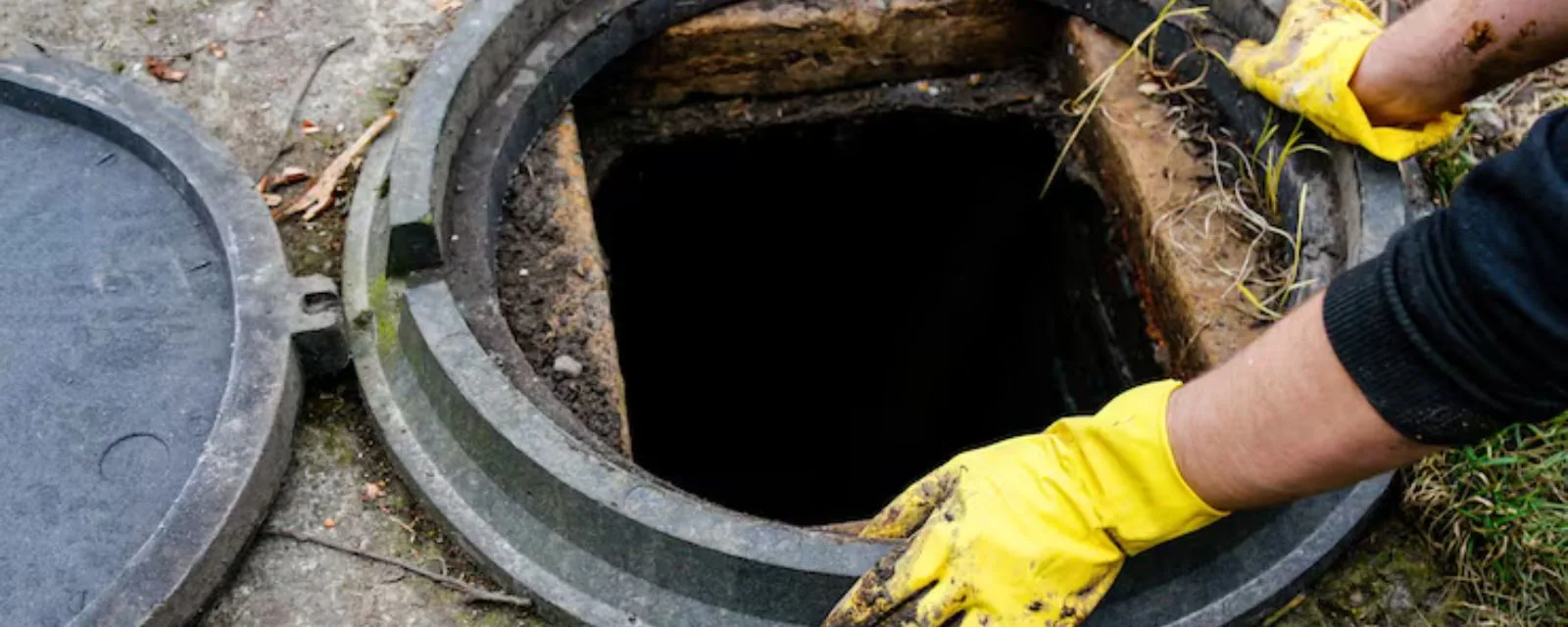
The main sewer line is the single pipe that carries everything from your house out to the public sewer or septic tank. When it stops, no fixture in the house can drain, and the lowest ones back up first. A licensed plumber can clear it day or night because dispatch runs 24/7, and the price is explained before the work begins.
If water is coming up now, stop using every fixture and call. Each flush or load of laundry adds to what is already pooling in your floor drain or shower.
How a main sewer line differs from a house drain
A kitchen or bathroom drain is a few feet of small pipe that serves one fixture or one group. The main line is a larger pipe, often a hundred feet or more, that every fixture feeds into. A cable that works on a sink trap is far too short and thin for it.
Clearing a main line takes a heavier machine with a longer, stiffer cable and a cutter head sized for the pipe. For ordinary sink and tub clogs, our drain cleaning page is the better fit. For the main line, the work starts at an outdoor access point, not at the fixture.
A main line backing up: how the clearing works
Here is what happens on a typical main line call, so nothing about the visit is a surprise.
- 1
Confirm it is the main line
We check the pattern. If the lowest toilet, tub or floor drain overflows when a higher fixture runs, the blockage is downstream of the house branches.
- 2
Open the cleanout
The cleanout is a capped pipe that gives direct access to the line. The cap comes off slowly, because backed-up water may be waiting behind it.
- 3
Cut through and clear
A cable machine with a cutter head goes down the line until it meets the blockage. It cuts roots, breaks up paper and drags debris back out.
- 4
Test the flow and look
We run water and watch it drain. A camera pass can then show what caused the stop, from roots to a sagging section.
Tell dispatch which fixture overflows first and where your cleanout is, if you know. We will explain the visit and the price before anyone is sent.
Cleanouts: the access point most owners never find
A cleanout is a short vertical pipe with a threaded cap, usually near the foundation, beside the driveway or close to the property line. Many homes have two, one near the house and one closer to the street. Knowing where yours is can save time on an after-hours call.
If you cannot find one, say so. Without a cleanout the line may need to be reached from a toilet, a roof vent or a basement drain, which takes longer and may need a fixture pulled and reset. Adding a proper cleanout during the visit is one way to make every future cleaning easier.
What blocks a main line in the first place
The cause matters, because it decides whether cleaning is a one-time fix or something to schedule.
Tree roots
Fine roots slip into joints and thicken into a net that catches paper. A line blocked by roots tends to clog in the same place again.
Grease and soap film
Fat that went down the kitchen sink settles in the main line and narrows it over months.
Flushed items
Wipes, feminine products and paper towels do not break down and bunch up at bends and joints.
A sag or break in the pipe
Waste collects in a low spot or a gap. If cleaning only helps for a short time, see sewer line repair.
Before the plumber gets there
Small steps that help the visit go quickly.
- Stop flushing, showering and running the washer and dishwasher.
- Clear leaves, mulch or a planter off the cleanout so the cap can be reached.
- Pull valuables and rugs back from floor drains in a basement or garage.
- Keep children and pets away from any standing wastewater.
- Write down when the problem started and which drain showed it first.
- Tell dispatch if the line has been cleaned before, and when.
Clearing it once versus cleaning it on a schedule
A line that is blocked by a one-off item needs one visit. A line with roots or grease is a different case.
Wait for the next backup
- Backups tend to arrive at night, on weekends or when guests are over
- Water damage and cleanup add to the bill
- Roots keep thickening between visits
- Each emergency is a surprise
Planned maintenance cleaning
- Done at a time that suits you
- Keeps roots and grease from forming a plug
- A camera pass spots trouble early
- Interval is set by what the camera shows
Maintenance cleaning: who it helps
Some properties never need it. A newer plastic line with no big trees nearby may run for years without trouble. Older lines, mature shade trees over the sewer path and homes with a history of backups are the ones that benefit from a regular visit.
Where roots keep returning, hydro jetting cleans the wall more thoroughly than a cable, and a camera inspection can set the right interval. We will not sell you a schedule your line does not need.
What determines the price of cleaning a sewer line
The price is stated before work starts. Homeowner insurance usually treats a clog from roots or buildup as maintenance, though some policies help with water damage from a sudden backup, so ask your agent.
Distance to the blockage
A stop near the house is quick. One far down the line needs more cable and more time.
Type of blockage
Paper and a toy are easier than a dense mat of roots.
Whether there is a cleanout
Outdoor access is simple. No cleanout may mean pulling a toilet or installing one.
Camera pass
Recording the pipe adds time, and it shows whether the line needs more than cleaning.
When you call
Night, weekend and holiday visits can price differently. Dispatch gives the number first.
Want your real number? Describe what is backing up and where your cleanout is, and dispatch will tell you what the visit involves.
Do not open a backed-up cleanout yourself
A cap under pressure can release a surge of wastewater. If the cleanout is full or the cap is stuck, leave it closed and wait for the plumber. Wash well after any contact with sewage, and keep children away.
Main line cleaning for Holly Springs addresses
First find out whether your home is on public sewer or septic. If your sewer service is billed by CCWSA, or another utility, you are probably on public sewer. A septic home needs a different first call, and questions about the tank go to the North Georgia Health District at 770-479-0444.
Responsibility for a sewer line usually changes hands somewhere between the house and the public main, so ask your utility where that point is before you hire anyone. We also serve Ball Ground, where the city runs its own water and sewer department, so a utility question there should start at City Hall.
Sewer line cleaning questions
Do you handle sewer line cleaning emergencies at night or on weekends in Holly Springs?
Yes. Dispatch is open 24/7 for main line backups. Tell them which drain overflows first and whether a cleanout is nearby. Same-day appointments are offered when available, and you hear the price before work starts.
What does a sewer backup mean?
Wastewater cannot leave the house, so it rises at the lowest drain. It can come from a blocked main line or from a problem in the public sewer. Stop using water and call to find out which.
What is the difference between sewer drain cleaning and main sewer cleaning?
They are usually the same job. Both clear the large line that carries all wastewater from the house, as opposed to a single fixture drain.
How often should a sewer line be cleaned?
Only as often as the pipe needs. A line with roots may need cleaning every year or two, and a clean modern line may need none. A camera shows which you have.
Is cleaning the same as hydro jetting?
No. Cable cleaning cuts a path through the blockage. Jetting uses high-pressure water to scrub the pipe wall. Both can be used on the same line.
Can I tell if the backup is from my line or the city sewer?
Often a plumber can tell from the cleanout. If the cleanout is dry and clear while the house backs up, the blockage is in the house line. If wastewater stands in the cleanout, call your sewer utility as well.