
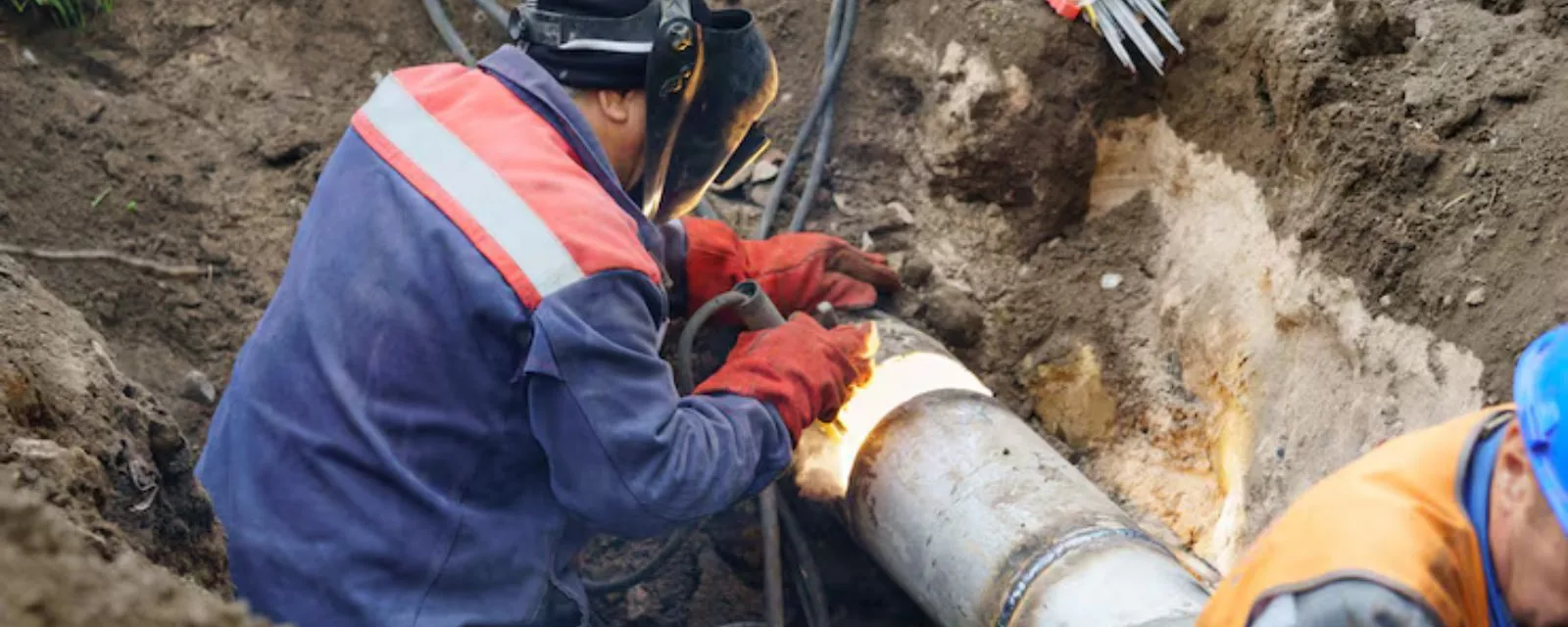
If your home sits on a concrete slab and you hear water running when nothing is on, feel a warm patch on the floor or see the bill jump, call right away. Emergency slab leak repair in Holly Springs means a licensed plumber confirms where the pipe is failing, explains the repair choices and tells you the price before work starts. Dispatch is open 24/7, including nights, weekends and holidays.
A slab leak is a leak in a water line that runs in or beneath the concrete foundation. It is out of sight, so the first job is proving it exists and pinning down where.
Signs of a leak under your concrete floor
One sign alone can have another cause. Two or three together make a slab leak much more likely.
A warm or hot spot on the floor
A hot-water line leaking beneath the slab heats the concrete above it. You may notice it in bare feet or on tile in one room while the rest of the floor stays cool.
The sound of water when everything is off
Lie near the floor in a quiet house. A faint rush or hiss that follows the pipe path suggests a pressurized line is leaking under you.
A bill that rises with no change in habits
Water escaping under the slab never shows up at a faucet, so the only record is on your meter and your statement. A steady rise over a billing cycle or two is the classic clue.
Low pressure or a water heater that runs constantly
A hot-line leak makes the heater refill and reheat nonstop. You may also see weak flow at fixtures far from the leak.
Cracks, damp carpet or flooring that lifts
Water that rises to the surface soaks carpet edges, buckles wood and can open hairline cracks in tile or grout. Baseboards that swell or stain are another warning.
How a slab leak is found without breaking the floor
We begin with the meter test. With every fixture off, a moving flow indicator proves water is escaping. Then we close the main valve at the house and look again. If the meter stops, the leak is inside the building, and if it keeps moving, it is in the buried line before the house.
Next comes electronic listening, which uses sensitive microphones on the floor to hear the leak and follow its sound to the loudest point. A thermal camera adds a second clue for hot-water lines, because the leak warms the concrete in a pattern you can see. A pressure test on each line isolates which pipe is losing water.
We then mark the spot on the floor. A camera cannot see through concrete, so these tools narrow the search to a small area instead of drawing a perfect map. Our leak detection page explains each tool in more detail.
Describe the warm spot, the sound or the bill to dispatch. We will explain the visit and the price before any work begins.
Slab leak repair options compared
There is no single best fix. The right one depends on how many leaks there have been, what the pipes are made of and how much of your floor you are willing to open.
| Option | What it involves | Best when | Honest trade-off |
|---|---|---|---|
| Spot repair through the slab | Cut a small opening in the concrete, repair the pipe, then patch the slab | One leak in an otherwise sound line | Disturbs the floor above the leak and does nothing about other weak spots in the line |
| Reroute the line | Abandon the leaking pipe and run a new line through walls or the attic | A line with repeated leaks or a hard-to-reach location | Opens walls and ceilings instead of the floor, and takes more time than a spot repair |
| Repipe the house | Replace the supply lines with new pipe, usually in the walls and attic | Worn pipe with leaks in several places | The largest job, with drywall patching afterward. See whole-house repiping |
| Epoxy pipe lining | A coating is applied inside the existing pipe to seal pinholes | Pipe that is otherwise sound and not heavily corroded | Not right for every pipe or building, and a failed section may still need cutting out. Ask what your inspector and insurer accept |
What is not possible, and what you should expect
We cannot promise that a leak is only one pipe or that the rest of the line is healthy. A pipe that has pinholed once has often thinned elsewhere, and we tell you what we found while the area is open.
A slab repair is also messy. Cutting concrete creates dust and noise, and the opening has to be patched once the pipe is fixed. We cover vents, move what we can and show you the plan beforehand, but this is not a quiet afternoon job.
Matching your flooring afterward is often the hardest part. Tile, wood and carpet can be replaced, but the pattern or color may not match, and that is a flooring contractor's job, not a plumber's.
What to do while you wait for the plumber
Water under a slab cannot be stopped by mopping, but a few moves limit the damage.
- Turn off the main water valve if you hear heavy flow, see water coming up through the floor or cannot get a plumber right away.
- Shut off the water heater if you turned off the main, so the heater does not run dry or overheat. For a gas heater, use the control on the unit, and for electric, use the breaker.
- Pull rugs, boxes and furniture off the warm or wet area and lift cloth items off the floor.
- Take dated photos of damp flooring, baseboards and cracks and note the date of your last normal water bill.
- Read your meter, record it and read it again later to show how much is escaping.
- Use bottled water and a second bathroom if you can, and avoid running the dishwasher or washer until the leak is stopped.
What affects the price of a slab leak repair
We give a clear price before work starts. A slab job has more moving parts than most repairs, so the number can change depending on what the detection finds. Many homeowner policies cover water damage that results from a sudden leak, and some cover the cost of reaching the pipe under the slab, but others do not. Ask your agent which parts of detection, access and flooring are covered before the work begins.
How many lines are leaking
One break on one line is a smaller job than several leaks across the hot and cold lines.
Which repair option fits
A spot repair, a reroute and a repipe differ a great deal in labor and materials.
How far the pipe is from open space
A leak under a utility room is easier to reach than one beneath a finished kitchen island.
Flooring above the leak
Tile, hardwood and carpet each add different removal and replacement costs, which are usually separate from the plumbing.
Time of day
Pricing can depend on when the visit happens, and we tell you the number before work starts.
Want your real number? Tell dispatch what you have noticed and we will walk you through the visit before anyone is sent.
Hot floor, wet floor and electrical safety
A very hot spot on a floor can burn bare skin, so keep children and pets off it. If water is rising through the floor near outlets, appliances or a panel, stay out of the room and shut off the breaker only if you can reach it standing on dry ground. If you smell gas, leave the building and call the gas utility or 911 first.
Slab leaks and your Holly Springs home
Not every home sits on a slab. Some have a crawlspace or basement where pipes are easy to see. If you are not sure, look in a closet or the garage for how the floor meets the wall, or ask the plumber. If your home has a crawlspace, the leak is usually easier to reach, and the leak detection page covers those cases.
If your water bill comes from the Cherokee County Water and Sewerage Authority (CCWSA), the authority owns the line up to the meter and you own the line from the meter to the building. A leak on your side, including one under the slab, is yours to fix. CCWSA customer service is 770-479-1813 if you want to confirm what your meter is reading.
Permit rules vary, so ask the City of Holly Springs at 770-345-5536 before replacing or rerouting lines. For homes in unincorporated areas near Hickory Flat, the Cherokee County Development Service Center at 770-721-7810 handles plumbing permits. Georgia's minimum plumbing code is based on the International Plumbing Code (IPC) with state amendments.
Slab leak questions
Do you handle slab leak emergencies at night or on weekends in Holly Springs?
Yes. Dispatch is open 24/7. If you hear heavy flow, see water coming up through the floor or cannot reach the main valve, say so on the call. They will arrange the earliest appointment available, and you hear the price before work starts.
How do I know it is a slab leak and not something else?
Run the meter test with everything off. If the meter moves and you have a warm floor spot or the sound of water, a slab leak is likely. A plumber confirms it with listening gear and a pressure test before anything is opened.
Can a slab leak be fixed without breaking the concrete?
Sometimes. Rerouting a line through the walls or attic avoids the slab, and epoxy lining works inside some pipes. Each has trade-offs, and we explain which ones apply to your house.
Will my insurance pay for a slab leak?
It depends on the policy. Many cover the water damage caused by a sudden leak and some cover access, but few pay to replace the pipe itself. Take photos, keep receipts and call your agent early.
How long can I wait before fixing a slab leak?
Not long. Water under the slab can soften soil, raise the bill each day and encourage mold in carpet and walls. If the leak is severe, close the main valve until the plumber arrives.
Does a slab leak mean I need to repipe the whole house?
Not always. One leak in sound pipe can be repaired or rerouted. A repipe makes sense when leaks keep appearing or the pipe material is worn out.