
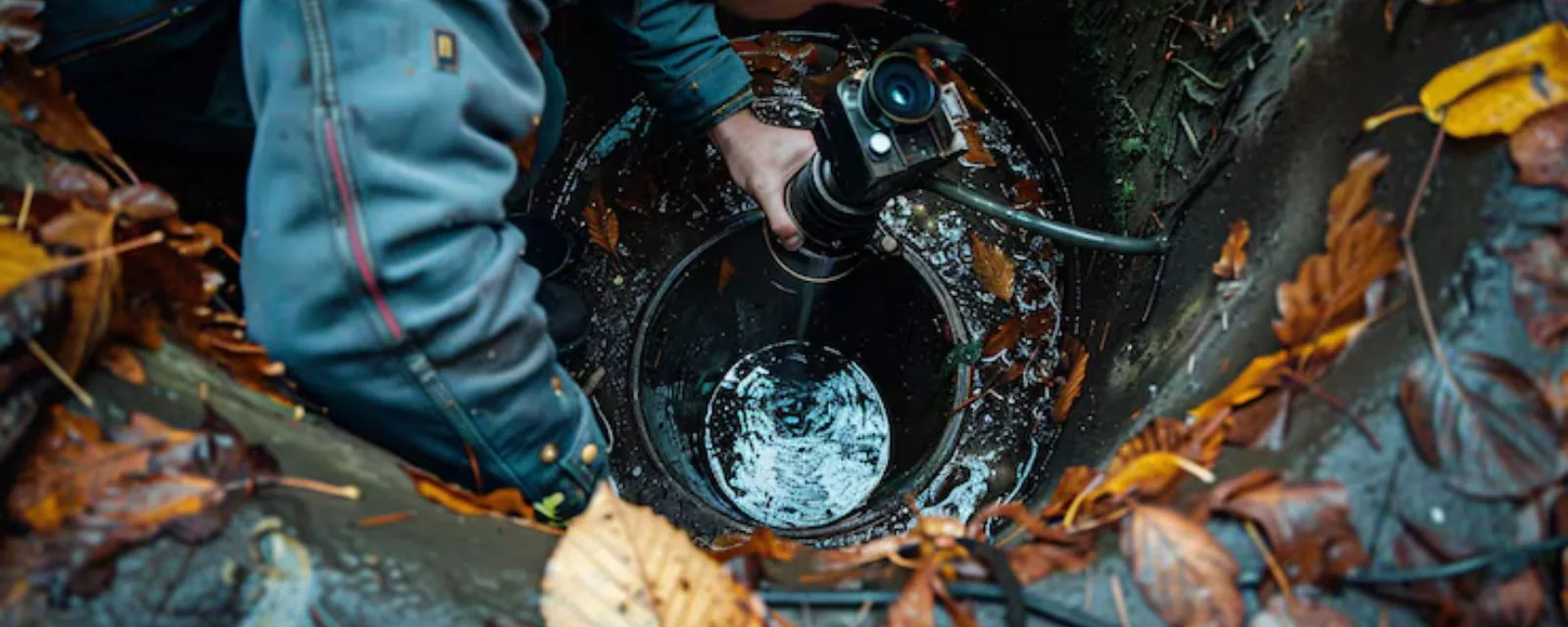
Yes, we use a sewer camera, and it records. A licensed plumber feeds a small waterproof lens on a flexible rod into your line, watches the picture live with you and saves the video. Dispatch is open 24/7, and you hear the price before the work starts.
A camera inspection answers questions a cable cannot, such as why a line keeps clogging, whether roots are present, or whether a crack is hiding under the soil. It is also the step that tells you whether you need repair or just cleaning.
Can you really see inside the pipe?
You can. The camera head is about the size of a small flashlight, with its own lights and a lens that looks straight ahead. It travels on a push rod through the cleanout, and the picture shows on a screen that you can watch with the technician.
On the screen you see the pipe wall, the water level at the bottom, roots entering a joint, cracks, offsets where two pieces do not line up and low spots where water pools. The picture is good enough to tell clay from cast iron from plastic in most lines.
How a sewer camera inspection runs
A typical visit takes this order.
- 1
Find the way in
The best entry is a cleanout outside the house. Without one, the camera can go in through a toilet flange, which means pulling the toilet.
- 2
Clean enough to see
If grease or paper coats the wall, a quick cable pass makes the picture usable. A pipe full of debris shows little.
- 3
Push the camera through
The rod feeds slowly toward the street or tank. The technician pauses at anything odd, and the recording keeps rolling.
- 4
Mark what you found
A locator picks up the camera's signal from above ground, so a problem can be marked on the lawn with its depth.
- 5
Go over the results
You get the findings in plain words, with the video to look at and options for what to do next.
Tell dispatch why you want the camera, whether for repeated clogs or a house purchase. We will explain the visit and price before anyone is sent.
What a camera shows, and what it cannot
A camera is a good tool with real limits. This is where it helps and where it does not.
| Condition | Can the camera see it? | What it tells you |
|---|---|---|
| Roots entering a joint | Yes | Where they enter, and how thick the mat is |
| Cracked or broken pipe | Usually | The location and the type of break |
| Offset joint or sag | Yes, with a locator | Where the line dips or shifts, and how long the low spot is |
| Grease and scale buildup | Yes | How much of the pipe width is left |
| A pinhole leak or a seep through a joint | Sometimes | Water staining may hint at it, but a tiny leak can hide |
| Condition beyond a collapse or full blockage | No | The camera stops where it cannot pass |
| Pipe under a slab, beyond the end of the run | Only what it can reach | It cannot see through concrete or soil, only inside the pipe |
Finding the line and marking it
A camera shows what is inside the pipe, but not where the pipe is. The locator is a handheld receiver that picks up a radio signal from a transmitter in the camera head. Walk the receiver over the yard and it shows where the head sits and how deep.
That depth and position matter the moment a repair comes up. A section 3 feet down under grass is a different job from one 9 feet down under a driveway, and the marks tell you which you have. It also helps you avoid digging in the wrong place.
Buying a house: camera the sewer before closing
A standard home inspection may not include a camera run through the sewer line, so ask your inspector what is covered. A recorded look before closing can reveal roots, cracks, a bellied section or old cast iron that would otherwise show up after you move in.
If the camera finds trouble, you have the video to use in a conversation about price or repairs. If you are buying outside the city, ask whether the house is on septic, because a camera inspection of a septic system is a separate matter and questions go to the North Georgia Health District at 770-479-0444.
When a camera inspection is not enough
Sometimes the camera is the first step and not the last. Expect more work in these cases.
- The line is blocked solid. It has to be cleared with a cable or hydro jetting before the camera can pass.
- The camera reaches a collapse and cannot continue. The rest of the pipe stays unseen until the break is repaired.
- The picture shows a damaged section. The next step is a repair plan, covered under sewer line repair.
- You suspect a leak in a water supply line, not the sewer. A sewer camera cannot find that, and leak detection uses different tools.
- The problem is a single sink. A small cable is the usual answer and a camera is overkill.
What affects the price of a sewer camera inspection
You hear the price before the work starts. Insurance usually does not pay for an inspection done for maintenance or purchase, though a claim after a sudden backup may cover diagnosis, so ask your agent.
Access to the line
A cleanout makes the visit simple. A line without one may need a toilet pulled.
Length of the run
A long line to the street takes more time than a short one.
Cleaning first
A coated or partly blocked pipe may need clearing before the lens can see.
Locating and marking
Marking a problem on the ground with its depth adds time.
Report and recording
Ask dispatch about getting a copy of the video and what is written up.
Want your real number? Tell dispatch what you want to learn about the line, and we will explain what the visit covers before anyone is sent.
Camera inspections in Holly Springs and nearby
Homes near the I-575 corridor range from older houses with clay or cast iron to newer builds with plastic. The camera shows which material you have and how it has aged, which is more reliable than guessing from the year.
Permit rules vary, so ask the City of Holly Springs at 770-345-5536 before any digging that comes from the results. In unincorporated areas such as Hickory Flat, the Cherokee County Development Service Center at 770-721-7810 handles plumbing permits. If your home is on drain lines that clog repeatedly, a camera is the quickest way to learn why.
Sewer camera inspection questions
Do you actually have a sewer camera?
Yes. We use a push camera with its own lights and a locator, and the inspection is recorded. You can watch the picture during the visit.
Can the camera find a clog or a leak?
It finds clogs, roots, cracks and low spots inside the sewer pipe. It cannot find a leak in a water supply line. For that, see leak detection.
Will I get a copy of the video?
Ask dispatch when you book. Having the recording lets you compare quotes or show a seller or insurer exactly what the pipe looks like.
Do I need an inspection before buying a house?
It is a good idea for older houses and for any with big trees near the sewer path. A standard home inspection may not cover the sewer line, so ask what yours includes.
How long does a camera inspection take?
It depends on the length of the line and whether it needs cleaning first. A clear line with an outdoor cleanout goes quickly, and a blocked or long line takes longer.
Does the camera work on septic systems?
It can look at the pipe from the house to the tank. The tank and drain field are a septic matter, and the North Georgia Health District at 770-479-0444 is the place to start.