
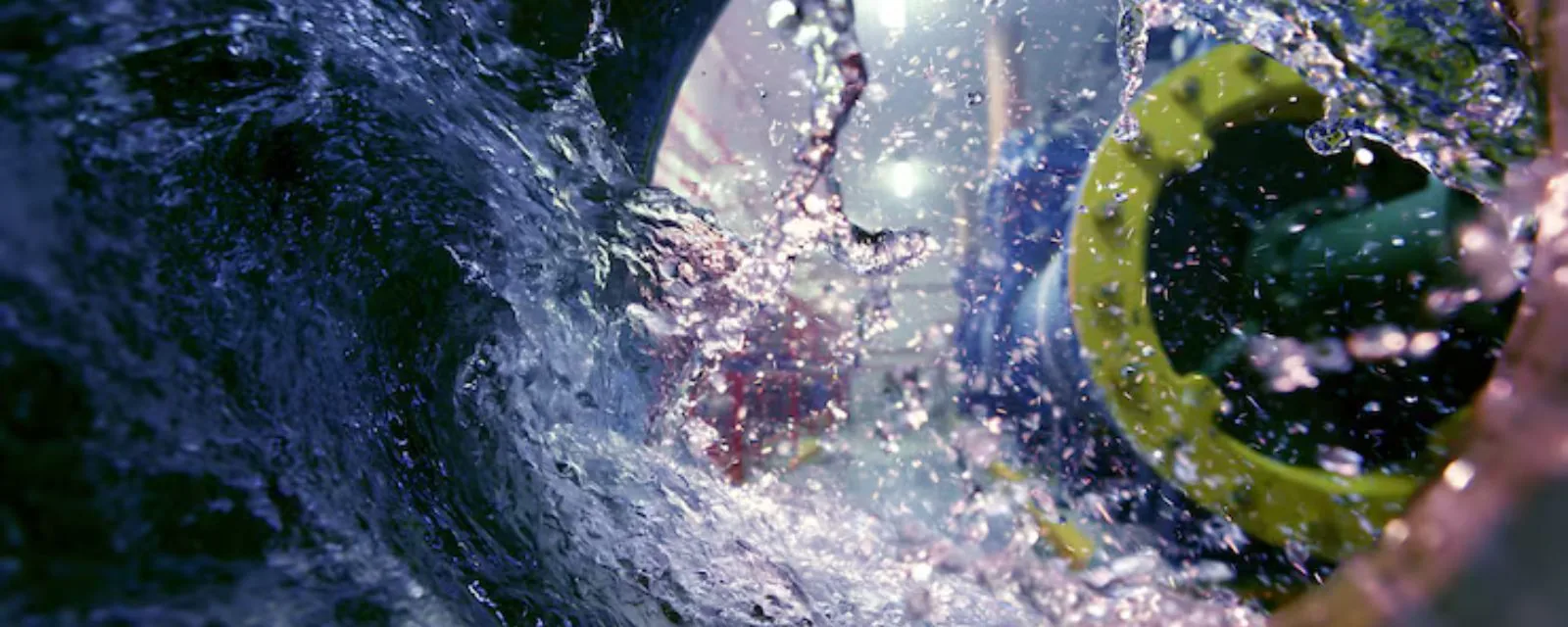
Hydro jetting sends a controlled stream of high-pressure water through a drain or sewer line to wash grease, sludge and root hair off the pipe wall. A licensed plumber can run it at night, on a weekend or on a holiday, because dispatch is open 24/7. You hear the price before the work starts, and you hear honestly if jetting is the wrong tool for your pipe.
If a line is already overflowing, turn off water use at every fixture and call first. Jetting is not always the right first move, and a quick conversation with dispatch will sort out whether you need a jetter, a cable machine or a camera.
What grease and roots do inside a pipe
Cooking fat does not stay liquid. It cools a few feet past the sink, clings to the pipe wall and traps soap, coffee grounds and food fibers until the opening is the size of a pencil. A cable can punch a hole through that mass, but the ring of fat stays behind and starts growing again.
Roots work differently. A hairline crack or a loose joint lets in moisture, tiny feeder roots follow it, and they thicken into a mat that catches paper and waste. Jetting with a rotating nozzle can cut the fine root hair and flush it out. It does not fix the joint that let the roots in.
Cabling, jetting or neither: matching the tool to the line
Most homeowners only need one of these. This is the logic we use on site, so you can follow the choice we make.
| Situation | Cable machine | Hydro jetting | Better first step |
|---|---|---|---|
| One-time clog from a toy, wipe or soft paste | Usually enough | More than needed | Cable the line |
| Kitchen line fills with grease every few weeks | Opens it briefly | Scrubs the wall clean | Camera, then jet |
| Fine roots in a sound pipe | Cuts the center only | Clears hair and fat together | Camera, then jet |
| Pipe is cracked, collapsed or offset | May catch and tear | Can push water out through the break | Repair the pipe first |
| Heavy silt or sand in a flat run | Pushes it around | Flushes it toward the sewer | Camera, then jet |
Tell dispatch how often it clogs and where. We will explain whether jetting makes sense before anyone is sent.
A line backing up again and again, in the middle of the night
Repeat backups tend to arrive at bad hours, because that is when the family is home and the dishwasher, washing machine and showers all run at once. If a cable cleared the line last month and the same drain is backing up again, call dispatch and say so. A repeat clog in the same spot is the strongest reason to ask for a jetter.
Same-day appointments are offered when available, and after-hours calls are answered. If a camera has to come first, we say that on the phone.
What to do before the jetter arrives
A jetting visit moves faster when the line is accessible and the house is quiet.
- Stop using water everywhere, including the dishwasher, washer and ice maker.
- Find the cleanout, usually a capped pipe in the yard or along the foundation, and clear leaves or mulch from around the cap.
- Keep pets away from the cleanout. Jetting can bring up wastewater when the cap comes off.
- Tell dispatch about past work, such as earlier cabling, a repair or a camera video you were given.
- Do not pour any chemical cleaner into the line. Jetting hoses and wet skin do not mix with leftover caustic liquid.
When jetting is the wrong tool
Jetting is powerful, so it needs a sound pipe. If the camera shows a crushed section, a pipe pulled apart at a joint or a long belly packed with debris, we will tell you plainly and talk about repair instead. Water pressure aimed at a broken pipe can wash soil into the break or soak the ground beside the house.
It is also overkill for most single-fixture clogs. A bathroom sink with a hair plug needs a small auger, not a jetter. Our drain cleaning page covers those jobs.
A jetting visit with a camera before and after
The camera is what turns jetting from a guess into a plan.
- 1
Look first
A small camera on a flexible rod goes in through the cleanout. It shows the grease, roots, offsets and pipe material before any pressure is applied.
- 2
Choose the nozzle and pressure
A forward-facing nozzle pulls the hose through the line. A rotating or spinning nozzle scours the wall. Fragile or old pipe gets less pressure than new plastic.
- 3
Jet in passes
The hose runs out to the far end, then is drawn back slowly while the nozzle scrubs and flushes debris toward the sewer.
- 4
Look again
A second camera pass confirms the wall is clean and shows anything the water exposed, such as a crack that was hidden under grease.
Old pipe needs a careful hand
Not every pipe can take a jetter. Cast iron that has rusted into scale, clay pipe with loose joints and thin-walled older materials can all be damaged by too much pressure or the wrong nozzle. The camera is how we judge this, and the pipe material shows on the screen.
If you know when the house was built or when the line was last replaced, tell the dispatcher. Where the pipe is too fragile, a gentler cable cleaning followed by a sewer camera inspection and a repair plan is the safer path.
Jetting a restaurant or shop kitchen line
Commercial kitchens put a steady load of fat into the drain. A one-off clearing helps, but a scheduled approach keeps the line from becoming an emergency in the middle of dinner service.
Cable only, when the line fills again
- Opens a channel through the grease
- Leaves a coating on the wall
- Often means another service call within weeks
- Does nothing for a full grease trap
Jetting plus trap maintenance
- Scrubs the full pipe wall
- Pairs with a regular grease trap pump-out
- Camera check shows how much fat is left
- Can be scheduled outside service hours
What changes the cost of hydro jetting
You get a clear price before work starts. Homeowner policies rarely pay for jetting that is plain maintenance or root and grease buildup, though some cover water damage after a sudden backup, so check with your agent.
Line length and size
A short branch needs less hose and time than a long run to the street. A wider pipe takes more passes.
What is in the pipe
Light grease washes out faster than packed roots or hardened scale.
Cleanout access
An outdoor cleanout is quick. A line with no cleanout may need a toilet pulled or a cleanout installed first.
Camera work
A recorded look before and after adds time, and it often saves the cost of a repeat visit.
Time of the visit
Nights, weekends and holidays can change pricing, and dispatch gives you the number up front.
Want your real number? Describe the line and how often it backs up, and dispatch will explain what the visit involves before anyone is sent.
Jetting for Holly Springs lines and kitchens
Restaurants and shops along the I-575 corridor, with exits 11 and 14 serving the city, run kitchens that put a lot of fat down the drain. If your business pays a sewer bill to CCWSA or another utility, ask whether it has grease rules. That tells you how often a grease trap and the line behind it should be serviced.
Homes outside public sewer use septic, and a septic tank is not jetted like a city-connected line. Call the North Georgia Health District at 770-479-0444 with septic questions. Permit rules vary, so before replacing any line ask the City of Holly Springs at 770-345-5536, or the Cherokee County Development Service Center at 770-721-7810 for unincorporated addresses. Georgia's minimum plumbing code is based on the International Plumbing Code (IPC) with state amendments.
We also serve Canton and the surrounding communities when a line needs a jetter, and a main line that has already failed is covered under sewer line cleaning.
Never put your hands or tools near a running jetter
A jetting nozzle moves water fast enough to cut skin. If you see the technician working, stay clear of the hose and the cleanout. Keep children out of the yard and away from any wastewater that comes up.
Hydro jetting questions
Do you handle hydro jetting emergencies at night or on weekends in Holly Springs?
Yes. Dispatch is open 24/7, and a licensed plumber is sent as soon as one is available. Tell the dispatcher whether water is overflowing and whether the line has backed up before. If a cable clears the line first, we say so, and jetting can follow at a planned visit.
Is hydro jetting better than snaking?
It cleans more of the pipe, so it suits grease and root buildup. A cable is quicker and cheaper for a one-time clog. Which one fits depends on what the camera shows.
Can hydro jetting damage my pipes?
It can if the pipe is cracked, collapsed or badly corroded. That is why we run a camera first and adjust pressure and nozzle to the pipe material. If the pipe is too weak, we recommend another approach.
Will jetting get rid of tree roots for good?
No. It clears root hair and mats, but the roots return if the crack or joint that lets them in is not repaired. Some lines need jetting on a schedule, and some need a repair.
How is jetting different from a regular drain cleaning?
Drain cleaning usually means a cable that opens a path. Jetting uses water to scrub the full wall of the pipe. See drain cleaning for the cable side of the work.
Do restaurants need jetting?
Often, yes, on a schedule. Kitchen lines carry fat daily, and a grease trap that is not maintained sends it into the line behind. A camera pass shows how much is left.