
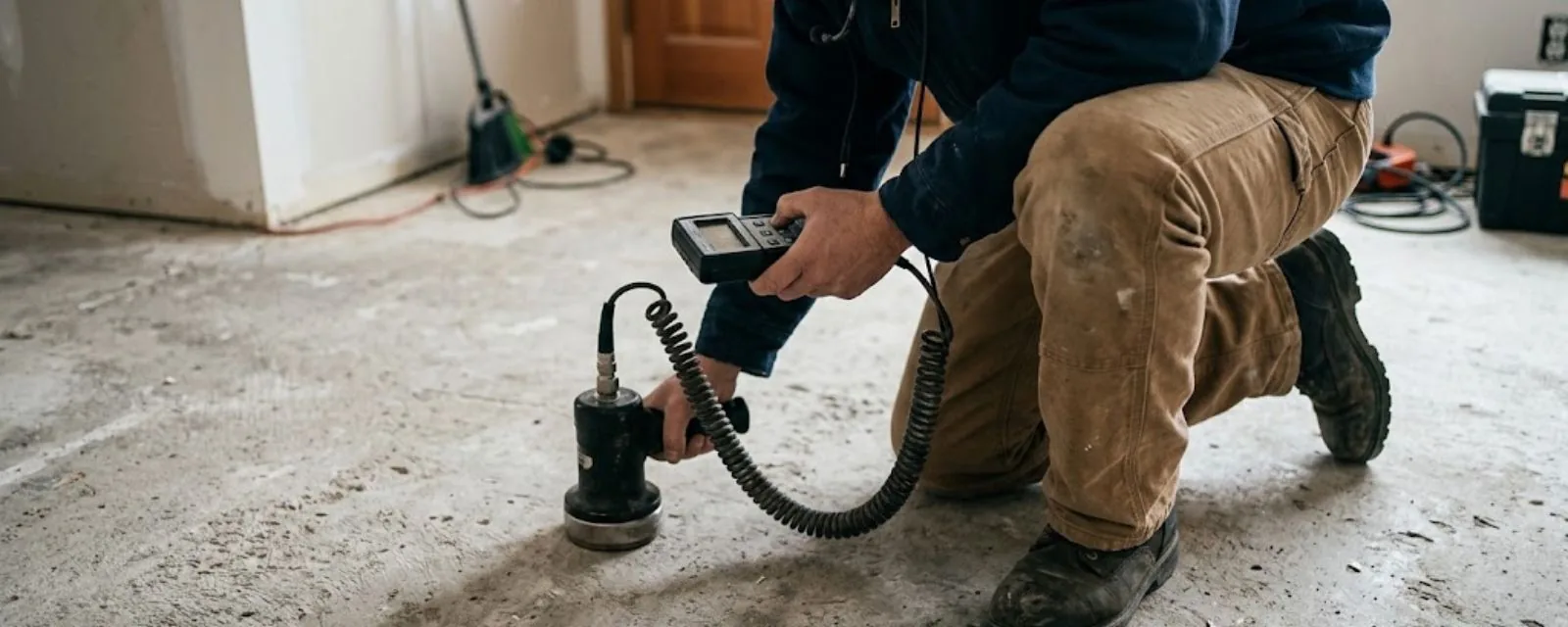
A slab leak is a break in a water or drain pipe that runs in or under the concrete floor of your house. A real expert finds it with listening gear, pressure tests and sometimes a camera, then tells you the location and your repair options before anyone touches the floor. Dispatch is open 24/7 if water is already showing.
Most of the skill is in the diagnosis, because concrete hides everything. Below you will see the warning signs, what a good visit looks like, what each tool can and cannot prove, and the red flags that should make you pause.
Signs of a leak under the concrete
One sign alone rarely proves a slab leak. Two or three together deserve a proper look.
A water bill that climbs with no change in habits
If nobody is running more laundry or watering more, a steady rise often means water is escaping somewhere you cannot see.
A warm spot on the floor
A hot water line leaking under tile or laminate can warm one patch of floor. Bare feet notice it before anything else does.
The meter moves with every tap closed
Turn off every fixture and watch the leak indicator on your water meter. A spinning dial or moving triangle means water is flowing somewhere.
Sounds of running water in a quiet house
A faint hiss or trickle at night, with no fixture open, can be pressurized water escaping a pipe.
Damp carpet, lifted flooring or a musty smell
Moisture rising through the slab swells wood, loosens glue and feeds mold along baseboards.
What makes someone a slab leak expert
The title is not regulated, so look at what the person actually does. An expert separates a supply line leak from a drain leak, can name the tools used to pinpoint it, and explains what each result means in plain words.
Ask whether the company is a licensed plumber and whether the work is insured. In Georgia, plumbers are licensed through the Construction Industry Licensing Board, and the Secretary of State site lets you search a name. Our slab leak repair page describes how we handle these calls.
Experience matters less than method. Someone who skips testing and goes straight to a quote for rerouting every pipe is selling, not diagnosing.
Tell dispatch what you have noticed. We explain the visit and give a clear price before work starts.
What a proper expert visit looks like
A thorough visit follows a set order. You should be able to see the logic at each stage.
- 1
Interview and walk-through
The plumber asks when you noticed the problem, which rooms feel warm or damp, and how old the house is. They check the meter and look at visible pipes first.
- 2
Isolate the system
Closing the main shutoff and watching a pressure gauge tells them whether the supply side is losing pressure. If it holds, the trouble may be a drain line or a fixture.
- 3
Pinpoint the spot
Electronic listening gear and sometimes thermal imaging narrow the leak to a few feet of floor. A second method should confirm the first.
- 4
Explain the options before cutting
You hear what was found, where it sits, and the realistic repair routes. Floors are opened only after you agree.
Who owns the pipe: slab leaks in Holly Springs
Cherokee County Water and Sewerage Authority (CCWSA) says it owns the line from the main to the meter. The customer owns the line from the meter to the structure. If you find a leak after the meter, including one under the slab, the repair and its cost are the homeowner's job.
CCWSA also publishes a service line inventory that you can search by address. If your bill comes from CCWSA, look up your address before the visit, and call customer service at 770-479-1813 if you cannot tell where your meter ends and your line begins. A plumber can then confirm the leak is on your side before you pay for digging.
Source type: water utility service line ownership and service line inventory pages
Slab leak detection tools and what each can tell you
No single tool solves every case, which is why a good plumber combines two or three.
| Method | What it finds | Honest limit |
|---|---|---|
| Water meter test | Whether water is leaking anywhere after the meter | Does not say where |
| Pressure test of isolated lines | Which supply line is losing pressure | Needs the lines to be isolated first |
| Electronic listening device | The sound of escaping water at the floor surface | Background noise and pipe material can blur the signal |
| Thermal imaging | Warm patches from hot water line leaks | Cold water leaks show little or nothing |
| Drain camera | Cracks, breaks and offsets inside drain pipes | Cannot see through concrete or inside pressurized supply lines |
A careful assessment versus a pushy pitch
The way a plumber talks about the problem tells you a lot before any work starts.
A pushy pitch
- Quotes a full repipe without testing anything
- Cannot say how the leak was located
- Pressures you to decide on the spot
- Gives a vague price that grows once the floor is open
A careful assessment
- Names the tests run and what each showed
- Marks the leak location and explains how sure they are
- Lays out spot repair, rerouting and repiping with trade-offs
- Gives a clear price before work starts
Red flags and questions to ask before you hire
Run through these with any company, ours included.
- Can they confirm they are a licensed plumber and that the work is insured?
- How will they locate the leak, and will a second method confirm it?
- Will they put the price and the scope in writing before work starts?
- Do they explain what happens to flooring, cabinets and finishes after the repair?
- Do they tell you what a hidden-leak claim may need from your insurer, such as photos and a written leak report?
- Do they admit when a leak may sit in a drain line, behind a wall or in the water service outside the house instead?
What an expert still cannot tell you
Detection narrows a leak to a small area, but it is not magic. If two pipes run close together under one section of floor, even a skilled technician may need to open a small test hole before confirming which pipe is leaking.
A camera cannot see through concrete, and a listening device can be fooled by a loud pipe nearby. If a leak turns out to be outside the foundation, the job moves to water line repair instead, and our leak detection page covers how we track down those cases. We also take calls from Canton and Hickory Flat when a slab leak is suspected.
Slab leak expert questions
How do experts find a slab leak without breaking the floor?
They combine a water meter check, a pressure test of isolated lines and electronic listening gear. Thermal imaging helps with hot water lines. The floor is opened only after the location is confirmed by more than one method.
Can a slab leak be fixed without removing the whole floor?
Often, yes. Many repairs open a small section of concrete above the leak. Whether that works depends on pipe depth, the pipe material and how many breaks the line has, so ask for the options in writing.
Does homeowners insurance cover a slab leak?
Policies differ. Many cover sudden water damage but not slow leaks from wear, and some pay for finding the leak while others do not. Call your insurer before repairs begin, take photos and keep the plumber's written findings.
Should I shut off the water if I suspect a slab leak?
If water is visible or the meter keeps running, close the main shutoff at the house and call dispatch, which is open 24/7. Leave the water off until a plumber has checked the line.
If my bill comes from CCWSA, who pays for a leak under my slab in Holly Springs?
CCWSA says it owns the pipe from the main to the meter and the customer owns the line from the meter to the structure. A slab leak is on the structure side of the meter, so it is normally the homeowner's responsibility. Check your account with CCWSA if you are unsure who bills you.