
Short answer: leak detection is priced by how hard the leak is to locate, not by a standard rate. A leak behind an open wall is a short visit. A leak under a slab or a yard line takes more equipment and time, and the quote should say so before work starts.
There is no verified price list behind this page, so we do not print numbers. Instead you get a way to confirm you really have a leak, a list of the methods and what limits each one, and a checklist for judging the report you receive afterward.
Run a meter test before you pay for a visit
A simple test tells you whether water is leaving your plumbing when nothing should be using it. It takes about half an hour and needs no tools.
- 1
Turn everything off
Stop the dishwasher, washer, ice maker and irrigation. Make sure no one flushes or runs a tap.
- 2
Find the meter and read it
Lift the meter box lid, which is usually near the street. Note the dial and look for a small triangle or wheel that spins when water flows.
- 3
Wait and look again
Leave everything off for fifteen to thirty minutes, then check the dial. Any movement means water is going somewhere.
- 4
Narrow it down
Close the main valve at the house and check the meter once more. If it still moves, the leak is between the meter and the house. If it stops, the leak is inside.
What a leak detection visit includes
A visit starts with questions. Where did you notice a problem, when did the bill change, which rooms feel warm or damp, and has anything been repaired lately? That history often saves an hour.
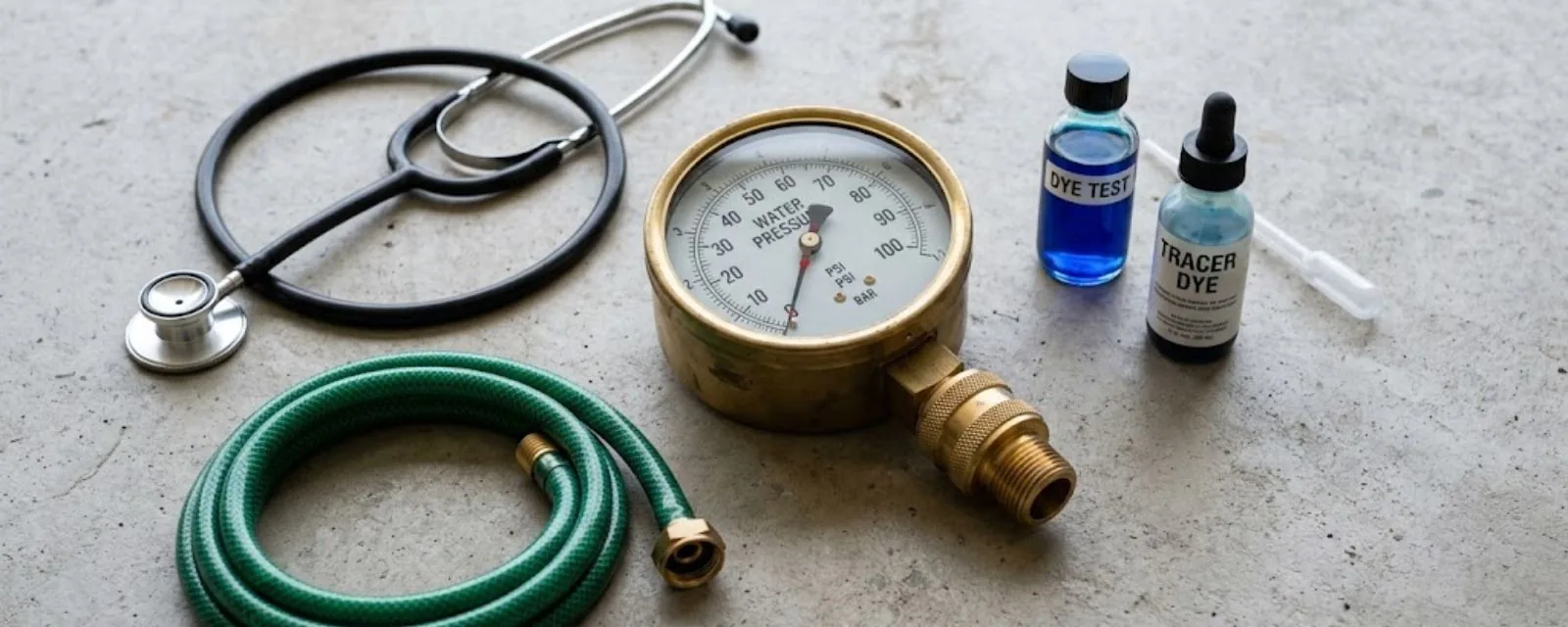
Then the technician isolates the system. They shut valves to split the plumbing into sections, run a pressure gauge on the lines and watch for a drop. Once the section is known, listening gear, a moisture meter or a thermal camera narrows the spot to a few feet.
Finding the leak is one job and repairing it is another. Many companies price them separately, and you should ask whether the detection fee is credited toward a repair.
Water quality and leaks in Holly Springs
CCWSA's FAQ says rusty or cloudy water can come from hydrant flushing or nearby construction, and that fire hydrant maintenance runs from April 1 to October 31. If discolored water shows up in that season, it may come from the utility, not from a pipe in your wall. That is worth knowing before you book a leak visit.
CCWSA suggests running the cold taps for up to 15 minutes. If muddy water has not cleared in 5 to 10 minutes, call CCWSA at 770-479-1813. The real signal of a leak in your own plumbing is different: a meter that keeps spinning with everything off, which is what the meter test above checks.
Source type: utility FAQ pages on water discoloration and hydrant maintenance
Detection methods and what limits each one
No single tool finds everything. Good technicians combine two or three and say when a result is only likely.
| Method | What it finds | Where it struggles | Cost driver |
|---|---|---|---|
| Pressure test | Which section of supply pipe is losing pressure | Does not give an exact spot | Number of zones to isolate |
| Acoustic listening | The sound of water escaping a pressurized pipe | Plastic pipe and noisy surroundings | Pipe depth and background noise |
| Thermal camera | Warm or cool patches from hot line leaks | Cold water lines with little temperature change | Size of the area scanned |
| Moisture meter | Wet drywall, subfloor or framing | Gives a surface reading only | Number of rooms checked |
| Sewer camera | Cracks and breaks inside a drain line | Cannot see leaks in pressurized supply pipe | Line length and cleanout access |
Describe what you are seeing and what the meter did. We will explain the visit and give a clear price before work starts.
What drives the price of leak detection
We give a clear price before work starts. The things below are what separate a quick job from a longer one.
Where the leak is likely to be
A leak in an exposed basement line is easier than one under a concrete floor or a driveway.
How much of the system must be isolated
Houses with several zones, older shutoffs or hidden manifolds take more time to test.
Methods needed
One pressure test is simple. Combining acoustic, thermal and camera work takes more equipment.
Access to walls, floors and cleanouts
If the technician must open nothing, the visit is simple. Opening a wall for a closer look is a separate step.
Report and documentation
A written report for an insurer takes more time than a verbal answer.
Want your real number? Tell dispatch what the meter did and where you see damage, and we will explain what the visit would involve.
What a good leak detection report lists
The report is what you are really paying for. It should be specific enough that a second plumber could act on it.
- The method or methods used and what each one showed
- A location, with distances or a sketch, not just a room name
- Pressure readings before and after isolation
- Whether the leak is on the supply side or the drain side
- Photos of the area and of any readings that matter
- A plain statement of what is confirmed and what is only probable
- Repair options, so you can compare them before agreeing to anything
Insurance and the limits of detection
Many homeowner policies cover the damage a sudden leak causes and exclude the cost of finding or fixing a slow one. Some pay for access to the leak, so ask your agent about both before the work starts, and keep the written report.
Be wary of any promise that every leak can be found in one visit. A very small leak under a slab may need a second method. If the leak is under the foundation, see our slab leak repair page, and for a leak in the yard line between meter and house, water line repair explains the options. Our leak detection page covers the service itself, and we also dispatch to Canton and Ball Ground.
Leak detection questions
How do I know if I have a hidden leak?
Watch for a water bill that rises with no change in use, a meter that moves with everything off, damp or warm floors, mold smells or the sound of running water at night. The meter test above separates a real leak from a guess.
Does leak detection damage my walls or floors?
Most methods are non-invasive. Pressure tests, listening gear, thermal cameras and moisture meters do not open anything. Opening a wall or floor happens only after the leak is located and you agree to the repair.
Can a leak be found without cutting into concrete?
Often, yes. Listening and thermal tools work through slabs in many cases, though results are less certain on plastic pipe or very deep lines. The technician should tell you how confident they are.
Will insurance pay for leak detection?
It depends on the policy. Some pay for locating a covered leak, others do not. Ask your agent before the visit and keep the written report.
Is rusty water in summer always a leak in my house?
Not always. CCWSA says hydrant flushing, construction and hydrant maintenance from April 1 to October 31 can discolor water for a short time. Run the cold taps and call CCWSA at 770-479-1813 if it does not clear in 5 to 10 minutes. A spinning meter with everything off is the true leak signal.
How soon can someone come out?
Dispatch is open 24/7, and same-day appointments are offered when available. You hear the price before work starts.